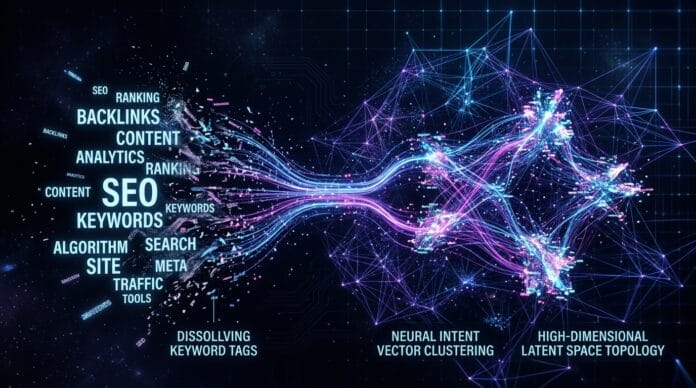

Search engines are no longer simple link directories. Over the past year, the way searchers look for information has fundamentally shifted from traditional keyword queries to conversational dialogues with AI agents like ChatGPT, Claude, and Perplexity. If your web pages are only built for traditional crawlers, you are missing out on an expanding ecosystem of generative discovery.
The Shift from Traditional SEO to Generative Engine Optimization (GEO)
In traditional Search Engine Optimization (SEO), success was measured by your ranking position on a static search results page. You optimized title tags, meta descriptions, and backlink authority to capture clicks. In Generative Engine Optimization (GEO), the goal is completely different: you want AI engines to extract your content, trust your data, and present your brand as the authoritative answer.
When an AI agent synthesizes an answer for a user prompt, it performs real-time retrieval-augmented generation (RAG). It scans structured semantic nodes, verifies information against high-reputation domain entities, and selects only the most precise references to cite in its output.
Structuring Content for AI Parsers and Humans
To rank in both traditional Google search and modern AI assistants, content structure needs to serve dual purposes:
- Semantic Chunking: Break complex technical explanations into concise, self-contained paragraphs that vector databases can cleanly vectorize.
- Entity Authority: Use clear schema markup (JSON-LD) and explicit facts that AI models can extract without hallucinating details.
- Direct Question-Answer Blocks: Format subheadings as direct questions followed by immediate, practical answers that can be extracted into direct chat UI snippets.
Practical Implementation Strategy
Building for GEO does not mean abandoning traditional SEO fundamentals. In fact, fast page performance (Core Web Vitals), clean HTML5 semantic markup, and strong domain reputation remain essential signals. The key difference lies in clarity and information density. Avoid fluff, present original insights, and provide verifiable data points that AI crawlers can confidently cite.
搜索引擎不再只是简单的网页链接目录。在过去的一年中,用户获取信息的方式发生了根本性的变革,从传统的关键字搜索转变为与 ChatGPT、Claude 和 Perplexity 等 AI 智能体进行对话式交流。如果你的网站内容仍然仅针对传统搜索引擎爬虫进行优化,你将错过庞大的 AI 生成式搜索流量。
从传统 SEO 到生成式引擎优化 (GEO) 的演变
在传统 SEO 中,成功主要取决于网站在静态搜索结果页面上的排名位置。我们通过优化标题标签、元描述和外部链接权重来获取点击流量。而在生成式引擎优化(GEO)中,目标完全不同:核心在于让 AI 引擎能够准确提取你的内容、信任你的数据,并在生成答案时将你的品牌作为权威来源推荐给用户。
当 AI 智能体为用户生成回答时,它会执行实时检索增强生成(RAG)。它会扫描结构化的语义节点,对比高权重域名实体的权威性,并仅挑选最精确的参考资料包含在生成的回复与引用链接中。
兼顾人类读者与 AI 爬虫的内容结构设计
为了同时在 Google 传统搜索与现代 AI 助手推荐中脱颖而出,内容架构需要兼顾双重需求:
- 语义分块(Semantic Chunking): 将复杂的文章拆分为独立完整的短段落,方便向量数据库建立索引。
- 实体权威认证: 使用清晰的 JSON-LD Schema 结构化数据与明确的事实描述,避免 AI 模型在引用时产生幻觉。
- 问答化小标题: 将二级标题设计为具体的问句,并紧跟实用详尽的解答,方便 AI 提取为问答卡片。
落地实施与优化建议
布局 GEO 并不意味着放弃传统 SEO 的基础。事实上,极速的页面加载响应(Core Web Vitals)、清晰的 HTML5 语义化标签以及良好的域名声誉依然是重要的基础信号。关键区别在于内容的清晰度与信息密度:减少空话与冗余描述,输出原创洞察与可验证的实操数据,让 AI 爬虫能够放心地将你的网站作为第一参考来源。

